Showing posts with label rice. Show all posts

Monday, June 28, 2010

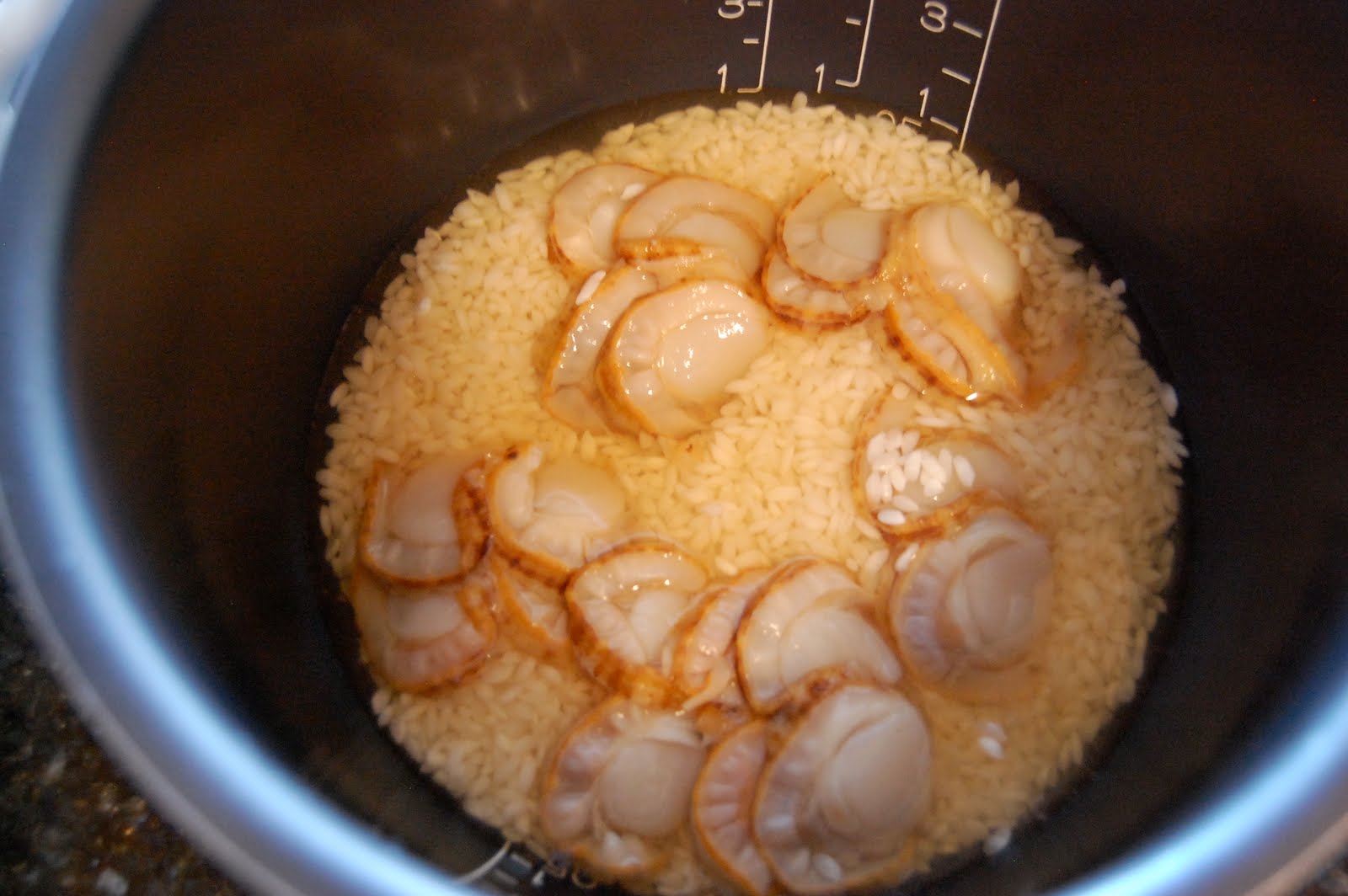
Hotate Takikomi Gohan 帆立ご飯 Scallops and Rice


Takikomigohan is rice steamed with different ingredients. It can be as simple as green peas or as complicated as several different ingredients such as a gomokugohan. Gomokugohan would have five different ingredients in the rice pot with the rice like chicken, carrots, shiitake mushrooms, hijiki, and gobo, for example. The rice is steamed with water, sake, mirin, and soy sauce.

As Shinji is a fishmonger we often make our takikomigohan with seafood. If you are working with raw fish like a whole sea bream or a filet of salmon, the fish needs to be salted and grilled before adding it to the rice pot. If the fish is not grilled the rice will be very fishy. I made the mistake once and will never do it again.

This is a very simple recipe. The scallops are pre-cooked. The amount of liquid to rice is still one to one, as when steaming white rice. The only difference is that a bit of sake, mirin, and soy sauce is added to the cup before being topped off with water. Steam as normal.

Takikomigohan on FoodistaTakikomigohan

Scallops on FoodistaScallops

Japanese Rice on FoodistaJapanese Rice

Wednesday, June 23, 2010

Zakkokumai 雑穀米


Brown rice was featured in a blog on the New York Times recently. Here is the link:

http://well.blogs.nytimes.com/2010/06/15/eating-brown-rice-to-cut-diabetes-risk/

Whole grains are naturally more nutritious than white rice. I tried eating just brown rice for several months while living in Japan but was often disappointed. A great alternative for me was to add zakkokumai (a variety of grains) to the rice pot when steaming white rice.

In this blog is a photo of Kagayaki 6-Grain Rice, premixed zakkokumai. I just added a Tablespoon of this to one cup of uncooked white rice and steamed it together and the results are in the rice bowl. The six grains are black rice, purple barley, hull-less barley, rye berries, MG red rice, short grain brown rice.

Following is a list of zakkokumai ingredients popular in Japan:

Zakkokumai 雑穀米 are beans, grains and millets that can be added to a pot of rice before it is steamed. The result is colorful flecked and spotted rice, but most importantly, essential vitamins and minerals are added. These grains can be purchased separately or already pre-mixed. Following are some of the popular zakkokumai ingredients:

Amaransu – amaranth
Awa – foxtail millet
Azuki – dried azuki beans
Daizu – dried soybeans
Hadaga mugi - rye
Hato mugi – Job’s tears
Hie– Japanese barnyard millet
Kibi – common millet
Kinia - quinoa
Kuromame – black beans
Maru mugi – uncracked grains of barley
Mochi – sticky rice
Oshi mugi – rolled barley

Japanese Rice on FoodistaJapanese Rice

Friday, March 19, 2010

Okra and Natto Rice


One of my favorite Japanese foods is natto, fermented soybeans. Here we have it for breakfast with okra. A kaiseki chef taught me how he treats okra. He quickly blanches it in hot water, then opens up the pods and removes the bitter seeds, then chops up the okra. The sticky texture of the okra with the slimy texture of the natto is a great combination, especially over a bowl of hot rice.

Natto

Okra on FoodistaOkra

Monday, March 15, 2010

Fava Beans and Rice 空豆ご飯


A nice contrast to always having white rice is to steam some vegetables in the rice pot when cooking rice. Fava beans are placed on top of uncooked rice and the rice is cooked as usual. This same dish is also nice with green peas.

Takikomigohan on FoodistaTakikomigohan

Fava Beans on FoodistaFava Beans

Friday, March 5, 2010

Salmon and Ikura Takikomigohan


Steaming rice with grilled fish creates rich, satisfying, flavorful dishes. Be sure to grill the fish before it is added to the rice pot or the results will be fishy. This is perfect with a variety of fish but hands down one of our favorites is salmon.

The salmon is grilled, rice is washed, and then all put together in a pot or rice cooker. Cook as you normally would cook rice (with the normal amount of water). When the rice is cooked remove any bones or skin from the fish and then return to the pot. Stir until the salmon flecks the rice and serve. On this day we topped the rice with some salted salmon roe (sujiko).

Thursday, February 4, 2010

Japanese Cuisine Basics - Rice


This great video by the Ministry of Agriculture, Forestry and Fisheries discusses Japanese rice, the base to many meals in Japan.

http://www.youtube.com/watch?v=lJbeesSWvc4

Japanese Rice on FoodistaJapanese Rice

Sunday, January 17, 2010

Recipe - Takikomigohan


Takikomigohan spice up our dining at home from the usual white rice that most often is what our meals are based around. Takikomigohan is rice that is cooked up with whatever you are keen on throwing into the pot. It is an efficient way to use up small bits and pieces that are leftover in the fridge. Scraps of vegetables like carrots, mushrooms, and burdock root. Meat can be thrown in (chicken or pork) or grilled bits of fish if you like.

Rinse the rice as you normally would. Put it into the pot and add your vegetables and protein. Then add the liquid as you normally would. To add depth to the rice, add dashi or some sake, soy sauce, and mirin to the water.

Once the rice is cooked toss it. The takikomigohan here has mushrooms, chicken, kombu and burdock root. After it was cooked I added some toasted sesame seeds.

Here you see the rice served for breakfast with miso soup and in Shinji's bento for his lunch.

Thursday, January 14, 2010

Tuna and Salmon Sashimi and Zuke 鮪サーモン漬け


Shinji brought home some salmon and tuna the other day. We have a bowl of sashimi, where he just rough chopped the fish, and the leftover fish he marinated in soy sauce and mirin, a dish called zuke. The next day for breakfast, after marinating overnight, Shinji put rice in a bowl, layered it with nori, and then topped it with the marinated fish and garnished with sesame seeds and freshly ground wasabi.

The wasabi was purchased at Mitsuwa. Shinji's company is importing it from Canada. It was pretty reasonable in price, compared to what is imported from Japan. The wasabi was very powerful and strong, too strong for me, but Shinji liked it.

Wasabi on Foodista